The alarm chose a sound that was supposed to make him feel like waking up was his choice.
Dima laid in the dark for eleven seconds, his back twisted into an unnatural position. Eleven seconds was just how long his body needed each morning to mourn the fact that its needs will remain unmet for another day.
The feed audio streamed in. His morning arrived on the screens and mirrors of his modest apartment, with subtle variations running to see which tone and vocal speed produced the best balance of calm and readiness. He walked over to the toilet, still listening.
Good morning, Dmitar. Here's what's happening in your world.
Dima’s world consisted of something about the countries elsewhere doing badly. Then there was a morale-boosting story of a man in another city, who had discovered a passion for fatberg removal operations through mandatory professional retraining. After that, a politician had said something that the feed found outrageous on his behalf, because outrage led to more interaction with the system. It worked. Dima harumphed.
He turned the feed off and made coffee. He drank it at the window. Directly below, a delivery drone was dropping something off to his downstairs neighbour. Frustrated, he was tempted to spill the rest of his coffee onto it. But he hesitated: that was exactly something his father would do. And he was better than that.
He thought about his childhood in Morvas. It had that bizarre smell that combined diesel and something mineral from the hot springs. The winter light that arrived in November turned everything a colour that best resembled really old newspapers. He snapped back to reality.
Dima now had the vocabulary now for what was wrong. It hadn't resolved the thing in the way he'd expected.
He rinsed his cup. He threw on his jacket, and the bag, which contained his phone and sandwich. He went out.
The bus came on time at 4:52. In Morvas, the buses came when the drivers finished spoking. He sat at the back, convincing himself that he wasn’t at all deserving of a more accessible seat. A woman in scrubs sat in front of him reading something on her phone. A man in a blue Pando jacket was soundly asleep, his face stuck pale against the glass. A boy in his teens, was raptly holding up a screen that looked far too large for his face.
Dima took out his phone. He saw a notification that a film he generated last night was ready:
It was a scenario of a kitchen, with an older man teaching a younger woman how to cut a vegetable. She fritzed it twice and the vegetable slid out of frame. She picked up another, from a seemingly infinitely regenerating pile and produced a neat pile of medallions as the older man observed intently. He watched the full two minutes of it. It was bizarre, but he spent the tokens on it.
Below the kitchen film, the platform had queued something else: a woman's face, mid-frame. The thumbnail text said: “I wasn't going to post this, but…“
He didn't open it. Something in his body closed before his mind decided anything.
He put the phone away.
–
You can feel the building when it comes into view. It displaces everything else in one’s visual field with its sheer, monolithic mass. Pando Hartwell, constructed in 2051. The year Curtis from corporate had explained workforce optimisation to its newly minted staff with genuine sorrow and used the word “transition” four times in eight minutes. Dima counted. Pando, they joked, was the new taxi driver. Engineers, lawyers, designers. The white-collar intelligentsia, now in blue chore coats.
He scanned his badge at the turnstile. Good morning, Dmitar. Your shift begins in four minutes. Today's productivity target has been personalised for your biometrics and readiness score, in line with our legal obligations.
Personalised, eh. He went to his station.
Gerald Okafor was already there. Fifty-three years old, former cybersecurity specialist, at the adjacent station for every day in the past three years.
Morning, Gerald said.
Morning, Dima said.
Feed give you the thing about…elsewhere…this morning?
Some version of it.
Mine said shortages. Food, infrastructure, everything going bad.
Mine said economic instability, but optimistic. Penalty rates are going up, government is looking into options.
Different story, Gerald said, scanning a box.
My wife got a peace initiative. My kid got a trade agreement. Four feeds, four worlds, same morning.
They looked at each other and then down at their workstations.
Pick, scan, place, move, Dima said.
Pick, scan, place, move, Gerald agreed.
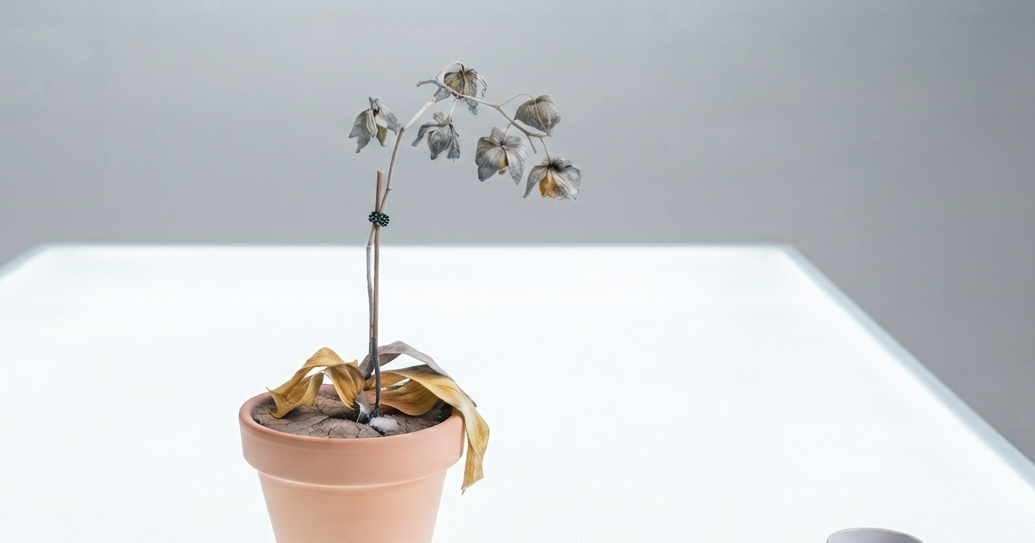
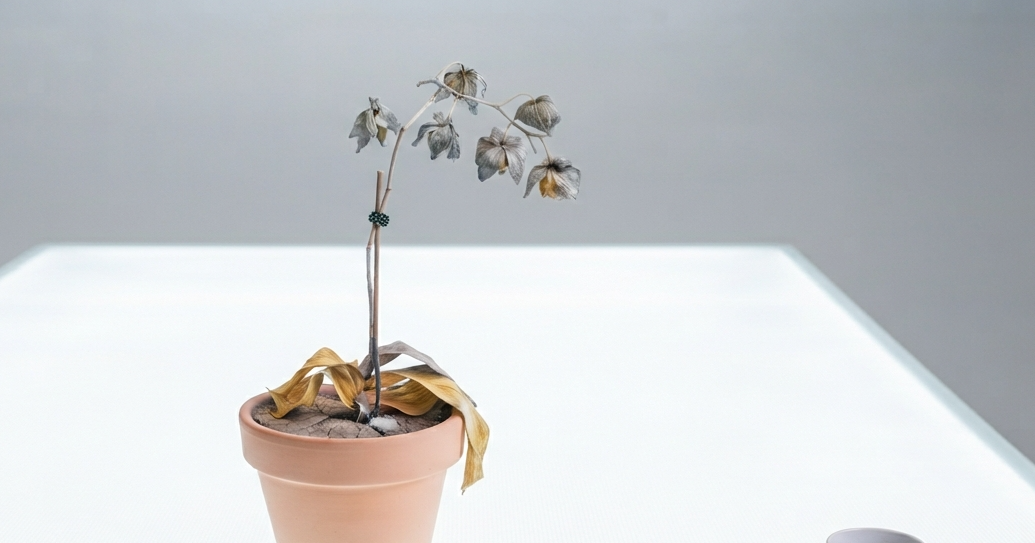
At seven am, Dima’s back decided to check in with some complaints. He acknowledged them, took an anti-inflammatory tablet and kept going. At eight he ate half of his now-soggy sandwich in the break room. Someone had placed a plant on the sill. The plant had died. It had become desiccated, but still hanging in there, as long as nobody touched it.Dima whispered to it: Pharaoh, you’ll still have dignity in the afterlife.
–
He checked his phone. Mara texted him at 6:43:
Pick. Scan. Place. Move.
–
Film fragment: a woman on a worn-out leather seat looks out at a window at something the camera never shows. The man across from her watches her watching. He opens his mouth. The train goes into a tunnel.
Outside, the country went about its business. The feeds ran. The drones flew. Pando ran on into the morning, indifferent to the hour of the day, or the bodies moving inside it.
In the other end of the city, in a facility called California Forever, a ninety-three-year-old Dorothy Wines was wide awake with her tablet screen on full brightness, working on something for thirty years.
She was not finished